
Cleanups are part of the actions that “EndPlasticSoup” is undertaking to achieve our goal: the disappearance of plastic whirlpools in the oceans by 2050.
We are active in educational work, there is a play and a musical: “No more plastic”.
https://docs.google.com/document/d/17TZSxxBDANmONv7I3m6L703PBFCOuDaIDqy5yBV1w7Y/edit
There are “Refuse, Reduce, Reuse, Repurpose, Recyle” and actions to remove plastic from the oceans.
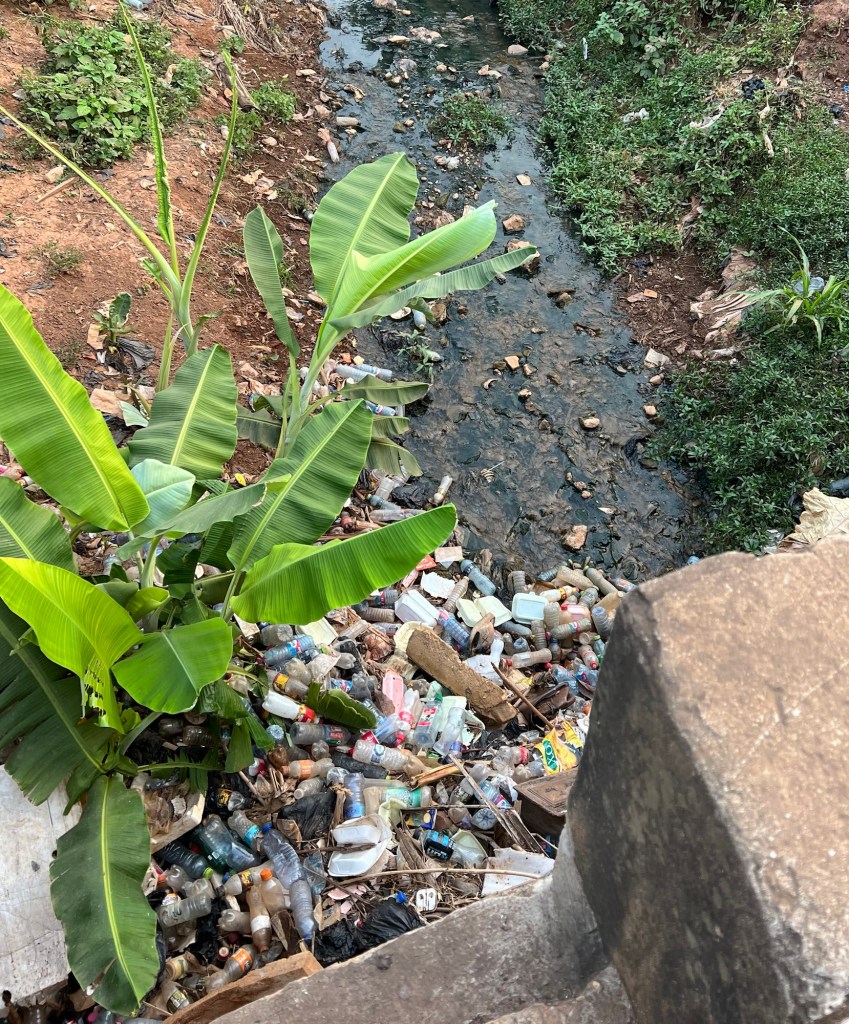
Ghana’s plastic problem has only been around since the 1980s. But since then it has come to dominate the landscape and plastic waste has come to dominate villages and towns. When the sewers become blocked and there are floods, it is washed down the rivers into lakes and the sea. Plastic waste is also exported from the rich north, where the streets are clean and the containers are emptied into the sea. Every day, one container, worldwide: one container every minute. Gathers with the ocean currents in huge, continent-sized garbage swirls. The ocean’s dumping ground. A disaster for marine ecosystems. We don’t want that and we won’t leave it to our children and grandchildren.
https://wwf.de/themen-projekte/plastik/plastikmuell-im-meer.de
Stop plastic waste in the oceans!
The pictures in Nkawkaw are terrible. Plastic everywhere. The rubbish is used for illegal burning. Stinking, grey, dirty clouds of smoke rise everywhere. The air quality is „unhealthy“. Children, these wonderful children, play among the „unnecessary fires“ that are forbidden, but there are no controls, they burn everywhere.
The sewage system is a collection point for plastic, the water is murky, green and smelly. The rivers? See for yourself. Finally, I’ll send you photos of the beach in Accra.
Plastic everywhere, even on the hospital grounds, thousands of fine black disposable plastic bags, the little plastic water bags, plastic bottles. Everything.
Awareness is high, there is so much support for the clean-up. Young people in particular know about it and want to make a difference. But it cuts across all generations and professions, the priests, the maintenance workers, the sisters, the carers, the nuns from the convent.
Saturday morning 6:30 am.
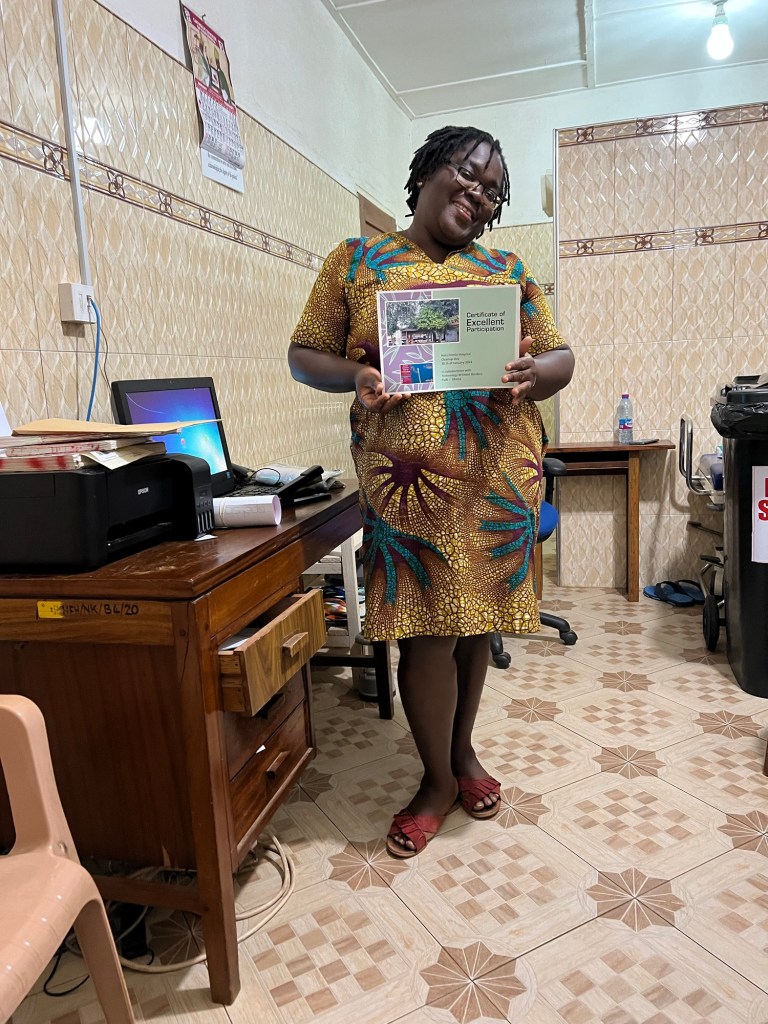
Sister Ruth at her best: large bins are bought, sturdy gloves, rubbish bags. Water, drinks and food for the participants. 25 people have signed up. Some people want to join, but don’t dare speak to us. We drive to a small street printing shop for the certificates. Shopping for prizes and sweets. Tough negotiations about the price of the two footballs. In „Malcome“ we buy fancy (plastic-free) drinking cups and a big wall clock. This was to be given to the neonatal ward, as it is the time of future generations that we are committed to.
Friday is preparation day, everything takes a while. We ride tricycles and taxis around the colourful city. This takes time, for example in the printing shop. But then there is someone who is interested in our project, who wants to help us, and who prints beautiful certificates and stickers for our collection bins.
Finally, everything is ready. Tomorrow’s meeting: 6:00 am (Ghana time). In the evening Robert and Bright arrive from Korforidua, the provincial capital, to help us.
The guesthouse is filling up, Gabby has cooked a big meal and the conversations are getting going. Bright is a radio announcer and investigative journalist. He and his team uncover terrible events full of corruption and crime. Like Abdul Rashid, he is completely disillusioned with those in charge in politics and yet completely optimistic about the future, because then the young will determine development. Expanding an affordable public transportation system would be so important. Railway lines were built from Accra in the south to Kumasi in the north. Bright shows research photos that prove that the planks and struts were broken out and disappeared over a stretch of 32 (!) kilometers. Nobody noticed anything, the police were surprised. Everything has come to a standstill, possibly for decades. He shows me research photos of a large bus parking lot, gutted public buses without wheels or brakes, unfit to drive, but no one can explain how this could have happened. So they have to wait for hours and drive endlessly in the small, roadworthy but unroadworthy, i.e. dangerous, private intercity buses. He was interrogated several times at police stations because of his research; he would, he couldn’t help but carry on.
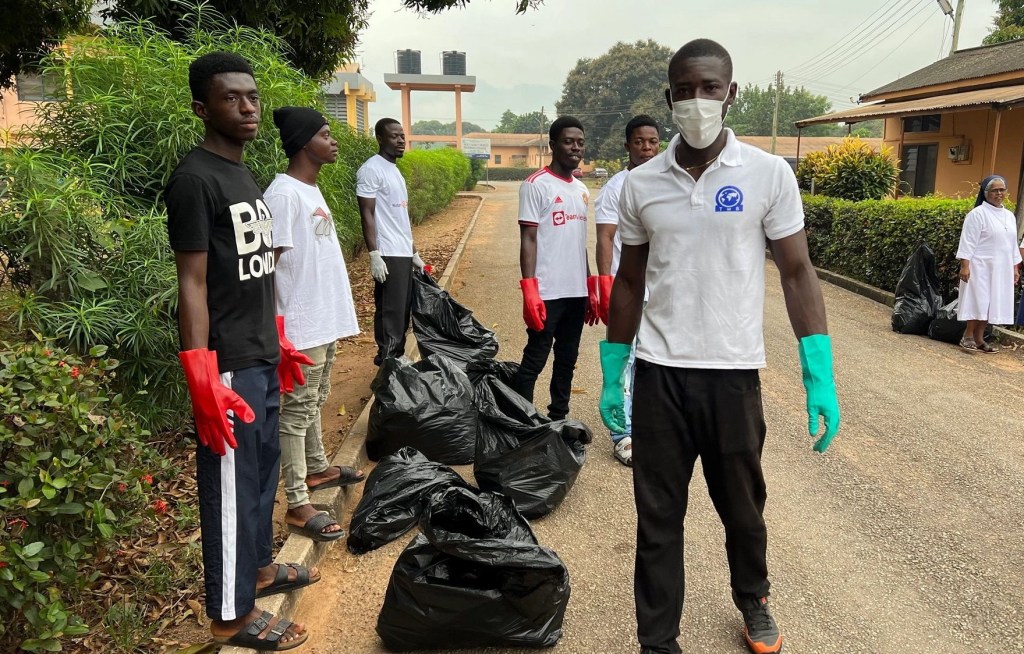
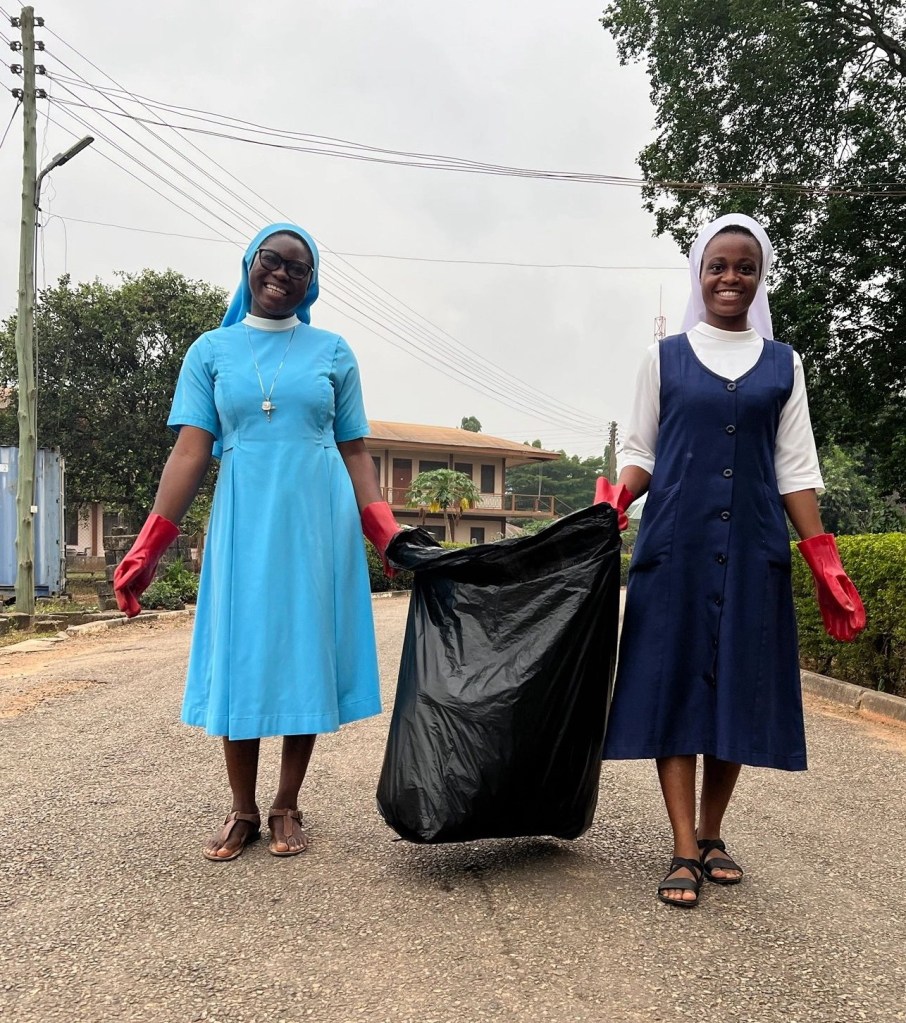
The next morning I am sitting in front of the endoscopy at 6:00 a.m. Nobody there, how do they know when their meetings are? Ruth arrives at half past six, early enough to take the bins, collection bags, gloves, drinks and T-shirts to the meeting point at the „gym“ (Beer bally gym…). Because nobody’s there yet. But then everyone arrives and they are in a great mood. They’re so happy they want to clear the area of plastic. We are happy about the Endplasticsoup T-shirts and they look great in them and with the red gloves. I’m lost.

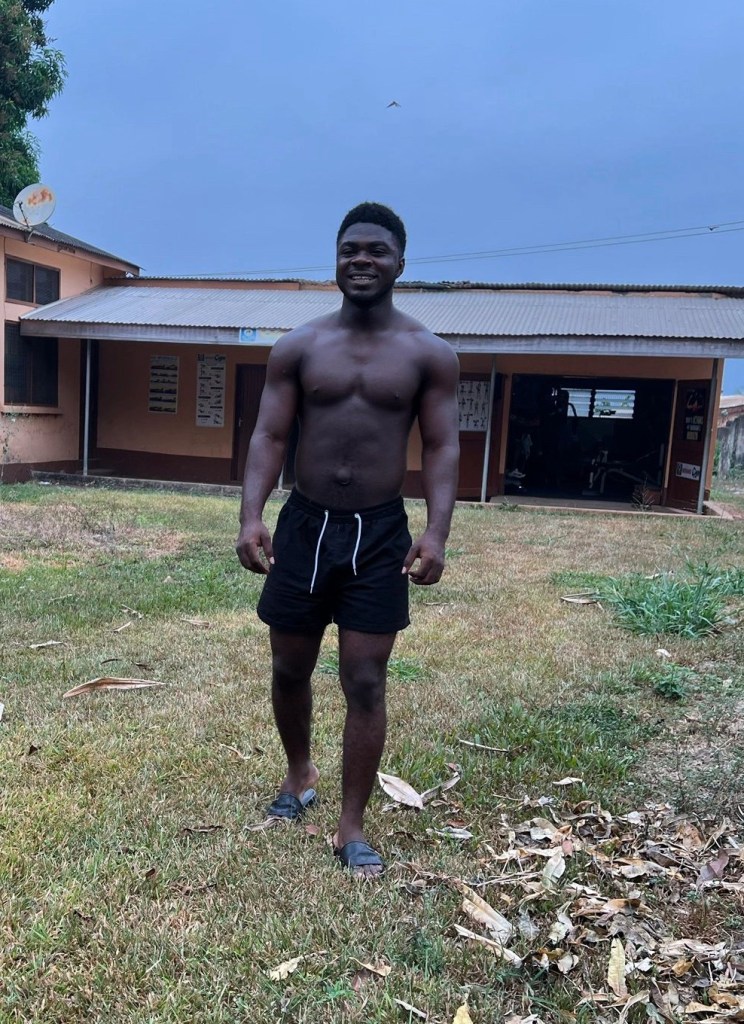
A hunky morning athlete with a bare upper body, which you can see, takes the starting photo.

Then off we go, into the bushes and everywhere. We have had the greatest success in the nuns‘ garden. The boys collected 7.8 kg of pure plastic, without bottles. Our collection is carefully weighed and documented.
We collect for a good hour and then the hospital grounds are clean. For days to come I’ll be bending over and throwing away plastic as I pass by. Change cleanups.

The boys? They are 8 nursing students on their way to becoming „nurses“. Dazzling, they turn the heads of many of the people present. Carefree, happy, energetic, full of nonsense and ambitious to win the cleaning competition. First place, first prize: a football. Great enthusiasm. They train hard and plan to challenge and, of course, beat the hospital team.

I distribute the five certificates and other prizes. They are happy and want everyone in the photos. The certificates are now hanging in the wards and the clock is ticking for the newborns.

The plastic is carefully stored; Jude is in contact with a dealer who will buy it from us and forward it for recycling.
Then we sit together and enjoy it. Drinks are distributed and small (non-plastic) bags with lunch. Thanks to Marja Ritterfeld, we can finance this with the donation from Endplasticsoup. There are still a few bags left, a shy nun from the convent comes by and is happy about the unexpected meal. It’s moments like these that particularly touch me.
Then: Wait for the Reverent. Out of gratitude for the support of our cleanup from “Technology without borders (TWB), Ghana”, I wanted to connect the supporters, now including Joseph three, with the hospital. As agreed, Ms. Derick is at the guesthouse at 2 p.m., but with little time. There is little to discuss. For the hospital, contact with “biomedical engineering” would be important, repairing and maintaining medical technology, but our visitors focus on water management and recycling. Inwardly I’m starting to feel a bit ashamed that my visitors have waited so long. But they are full of respect and are happy that such an important man like Reverent Derick Mawuli took time for them. Addresses are exchanged and photos are taken.

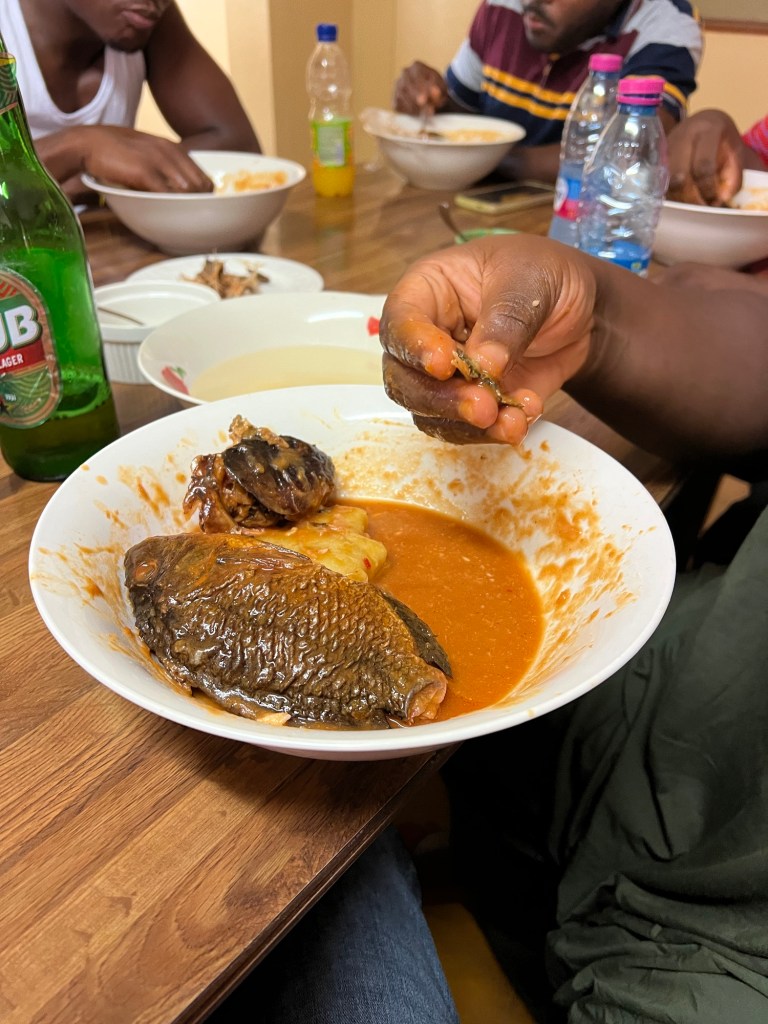
As soon as Mrs Derick is gone, Gabby appears: Fufu with fish, five huge bowls. Yams and plantains. Giant puddings, similar in consistency, not taste, to Austrian yeast dumplings, but at least three times the size, yellowish, not dissimilar in taste to sweet potato puree. Served with a spicy sauce and fish.
Wash your hands. One bowl, two people. Dip your fingers in. Then you have to twist the fufu into a bite-sized ball, pour the sauce over it and put the fish in your mouth. I found it a bit difficult. My neighbour Ruth is laughing her head off, the whole thing is being filmed, photographed and commented on. I’m brave, but I get full very quickly. That’s why I’m afraid of the large quantities. FIVE. And again there is a knock on the door and another – sixth – bowl is brought and an extra bowl of fish. Gabby asks what I want for dinner („nothing!“); but Bright is beside himself. He asks for Gabby’s phone number. Favourite dish, best cook in the world. She already has an invitation to Korforidua. Jude has no problem with his bowl, I mean he eats four fish. The others don’t have any problems either. Unbelievable: everything is eaten. They love fufu with hot sauce and fish. This has something to do with the national dish and especially childhood.
Suddenly my guesthouse is empty and I can spread out again.
I’m happy to be able to inform my Rotary Club, Abdul, who supported us so well, and Marja, EPS Amsterdam. It was the most beautiful day so far. The people touch my heart. More is not possible.

We need to talk. About „cultural appropriation“, because that is what happens here on Sunday mornings in St Michael’s Church. My first visit was a misleading exception. On Sundays 2 and 3 it was simply enchanting.
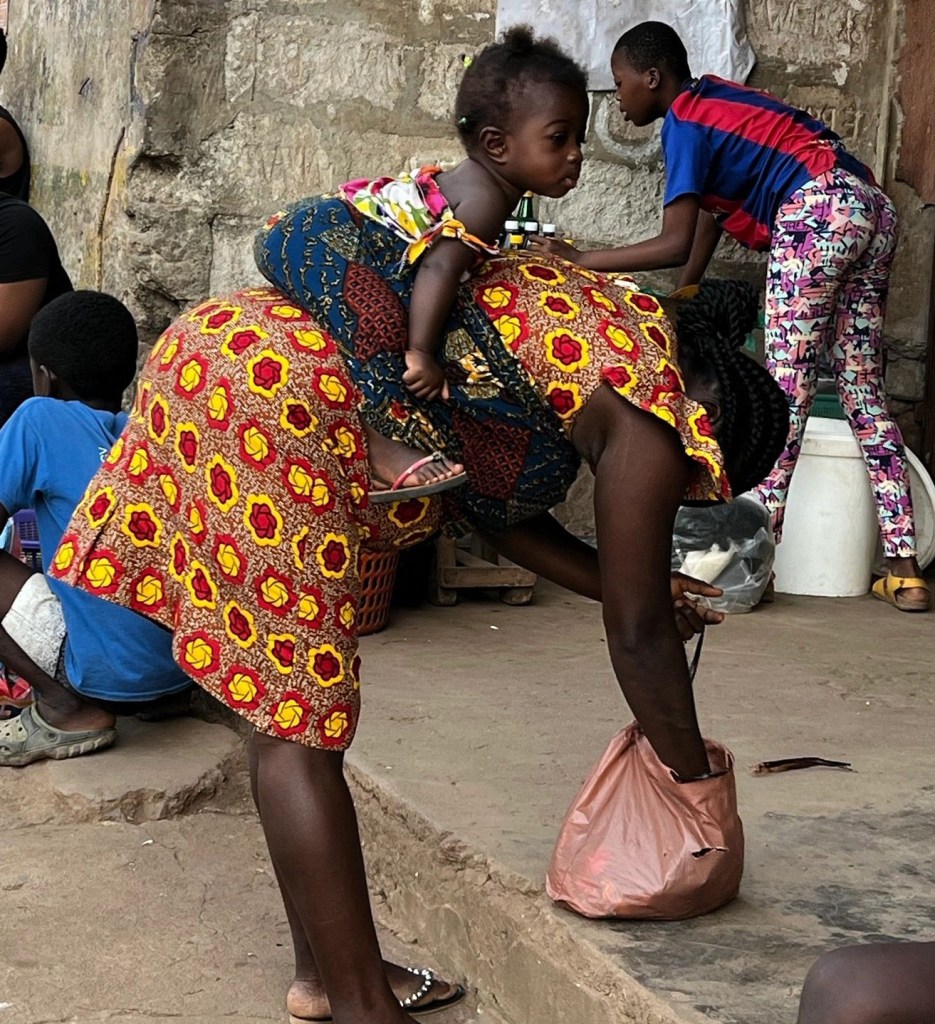
The Holy Roman Rite, the prayers, the blessing, the profession of faith, the consecration, everything goes on. Very serious, very solemn, well-rehearsed choreography. But then comes: Ghana! The rhythm of the songs carries everyone along, people dance, clap, laugh, giggle and celebrate. Children run around, play, get sweets. It is a special Ghanaian rhythm that moves everything. I think it’s deep inside them, even the little ones are rocking on their mothers‘ backs, it seems to be in their singing, their dancing, in their words and certainly in their thoughts, in every „move“. Even the older ones can no longer stay on the benches, they stand up and sing, they have rhythm, they move; joy. I don’t want to rave about the children again, but in their fine, colourful Sunday clothes, with their cute little braids, in suits, it’s overwhelming.
When it comes to giving in our church service, the organ plays and a bag of bells is passed through the rows. No one is allowed to see how much, or whether, or who is giving.
Here: the choirs sing, the people stand up and march in long rows in front of the altar, each with their cedi notes, laughing and singing on the way to the altar and especially on the way back, dancing on their way back to their places. Then they come from the entrance through the long centre row with gifts and envelopes of all kinds. Huge banana trees are brought in, fruit, vegetables and full baskets are placed in front of the altar. Reverend Derick blesses Wedel with his holy water. It’s a lot of fun and that’s why it’s done twice. The joy of giving, seeing and being seen. Community.
I can see the mostly empty churches back home, the few remaining believers and an elderly priest holding a heavy Bible up to his forehead and showing it to the congregation. He reads.
Reverend Derick stands with great joy and watches as the holy book is reverently brought to him by a diverse group of people. The Bible is wrapped in a red and gold cover and is gracefully held aloft by a small boy sitting on a litter carried by four men. The palanquin is lined with colourful fabrics, candles are carried forward, solemn music from choirs, the boy shows the Bible to the faithful, who beam at him. They walked slowly and solemnly to the altar and presented the book to the worshippers. Reading.


Incident. The appearance of a confused elderly woman caused a stir. She had wandered around the church several times before, somewhat disoriented. An „usher“ had corrected her and then sent her away. This time, however, she made a beeline for the sanctuary. The sermon, although at a high point (Jesus to his disciples: Follow me. Take nothing with you but the way. Go!), had to be interrupted. At first she could be removed. But then her resistance grew. At this point a strong wooden stick appears, which seems to have been specially prepared for similar events. Perhaps she escaped from the hospital’s psychiatric ward. As expected, her agitation increases after the first few strokes. It takes a large number of people to finally carry her away safely. May she find peace again. Reverend Derick remains calm, has a calming effect, then continues his sermon. Change yourselves, your routines, be serious, make an effort and know that it doesn’t come without sacrifice. If you’ve done something wrong, don’t look for explanations, bear the mistake. You did it. Others will forgive you.
„Take nothing with you but the path.“ What a powerful phrase!
Back to cultural appropriation: They have incorporated traditional Roman Catholic expressions into their identity, they have placed them in their context. They have long been the bearers of the dominant Catholic culture. They have taken symbols, artefacts, rites and given them a new expression with enormous vitality. Happy Catholic Church.
The term “transculturation” is probably more correct to describe this phenomenon. The peaceful and celebratory adoption and integration into one’s own culture as an expression of what is here right now.
It’s very moving. It is full, full of children and young people who naturally take on their tasks in this big festival. Talk about the future.
For communion, which is another big performance by the congregation, there follows a very classic aria, performed by a powerful tenor, great art, indescribable.


 Ghana 2024
Hinterlasse einen Kommentar